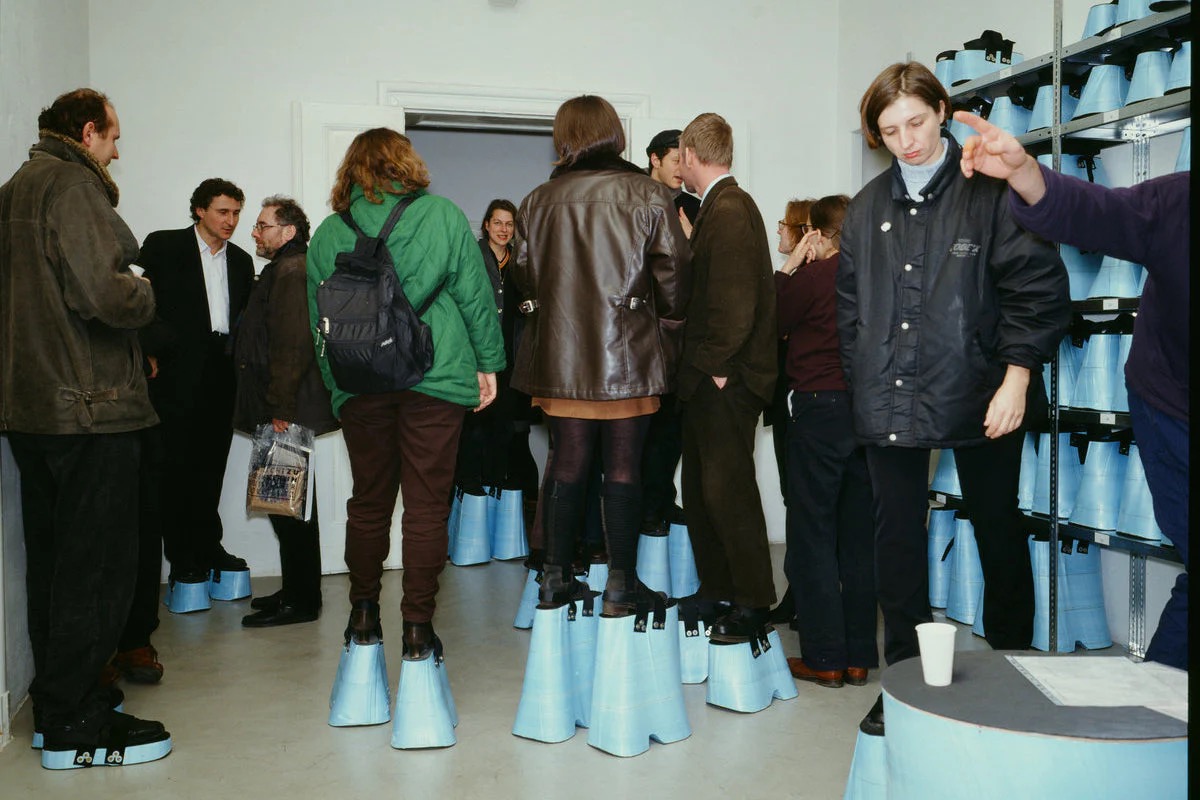
A while ago I was hanging out with some coworkers and the topic of theme parties came up. I’ve always been a fan of a themed party, especially more absurd ones, and I remembered a video I’d seen recently about a “same height party.” The gist of the idea is that each guest must attach a stack of risers to their shoes so everyone is eye level with each other.
It’s hard to understand where any ideas come from, but it hit me like a bolt of lightning: I needed to throw a “Same Wavelength Party” where only a single wavelength of light is permitted.
I knew this should be possible because as a child I’d been interested in telescopes and astronomy. I must have read about low-pressure sodium lamps. These are gas discharge lamps which excite an electron in a sodium atom to a higher energy state and harness the light produced when the electron returns to its base state. Sodium is somewhat unique in having only a single easily-accessible transition, which corresponds to the single deep yellow wavelength of 589nm. Astronomers tend to prefer this as a street lighting technology since they can notch filter out that little narrow band and get a clear view of the sky through the light pollution.
I went looking for lamps and fixtures of my own and found immediately this was going to be a vintage-flavored project. Low pressure sodium had its heyday as a street lighting technology sometime in the 1980s and has been in decline ever since. I’d certainly seen these lights before, but as I remembered, much more as a child than as an adult.
I found a listing on eBay for street lighting fixtures which had been salvaged from Escondido, CA. Due to their proximity to the Palomar Observatory, these had likely held out longer than most low pressure sodium installations. The fixtures were huge, bulky, and beautiful. You could tell just from looking at them, they would cost a fortune just to ship. I ordered four.
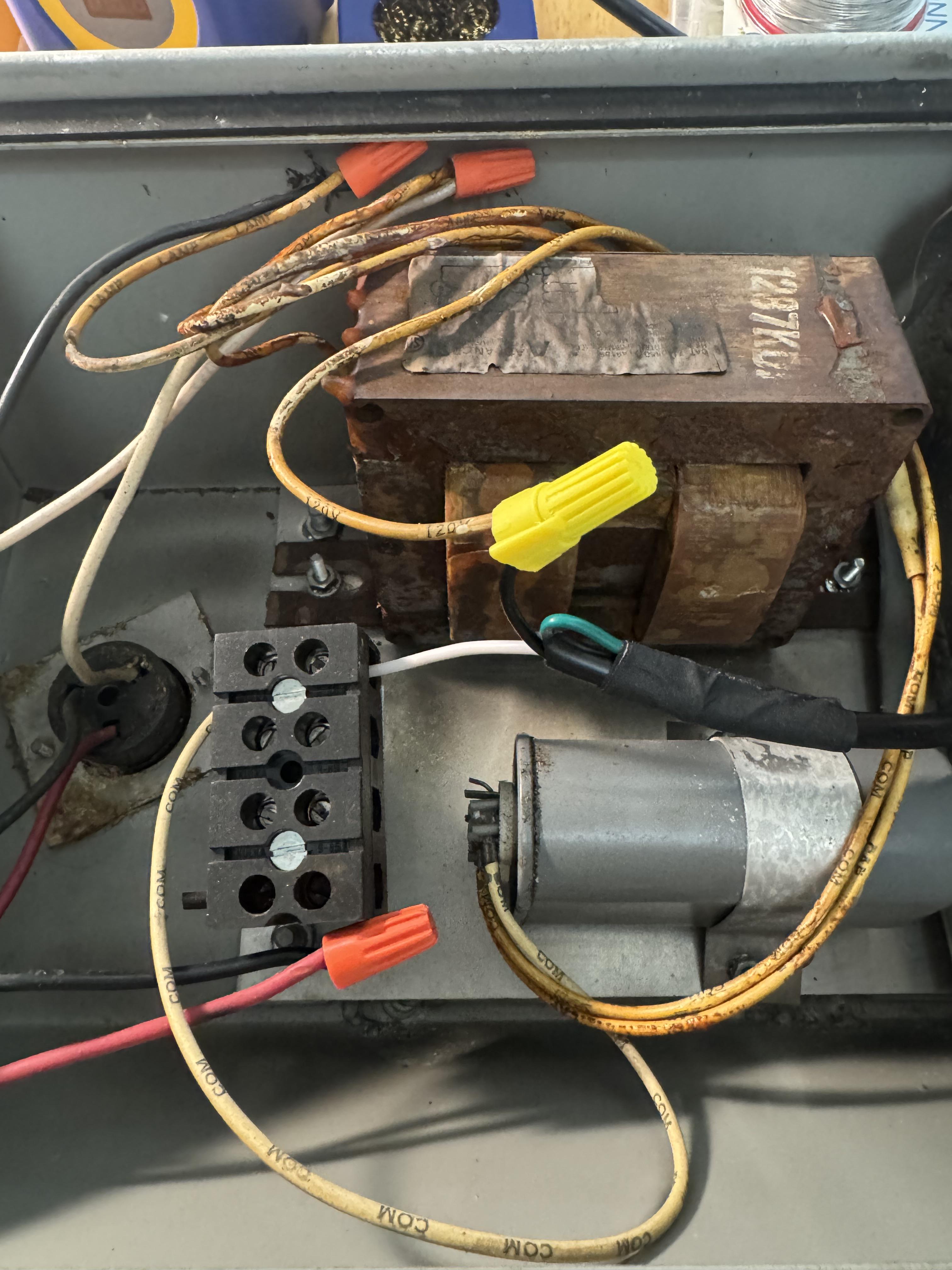
When the fixtures arrived, I opened up the lower section to find tons of moths and dirt, but also perfectly functional electronics. The only restoration needed was cleaning and some new wire.

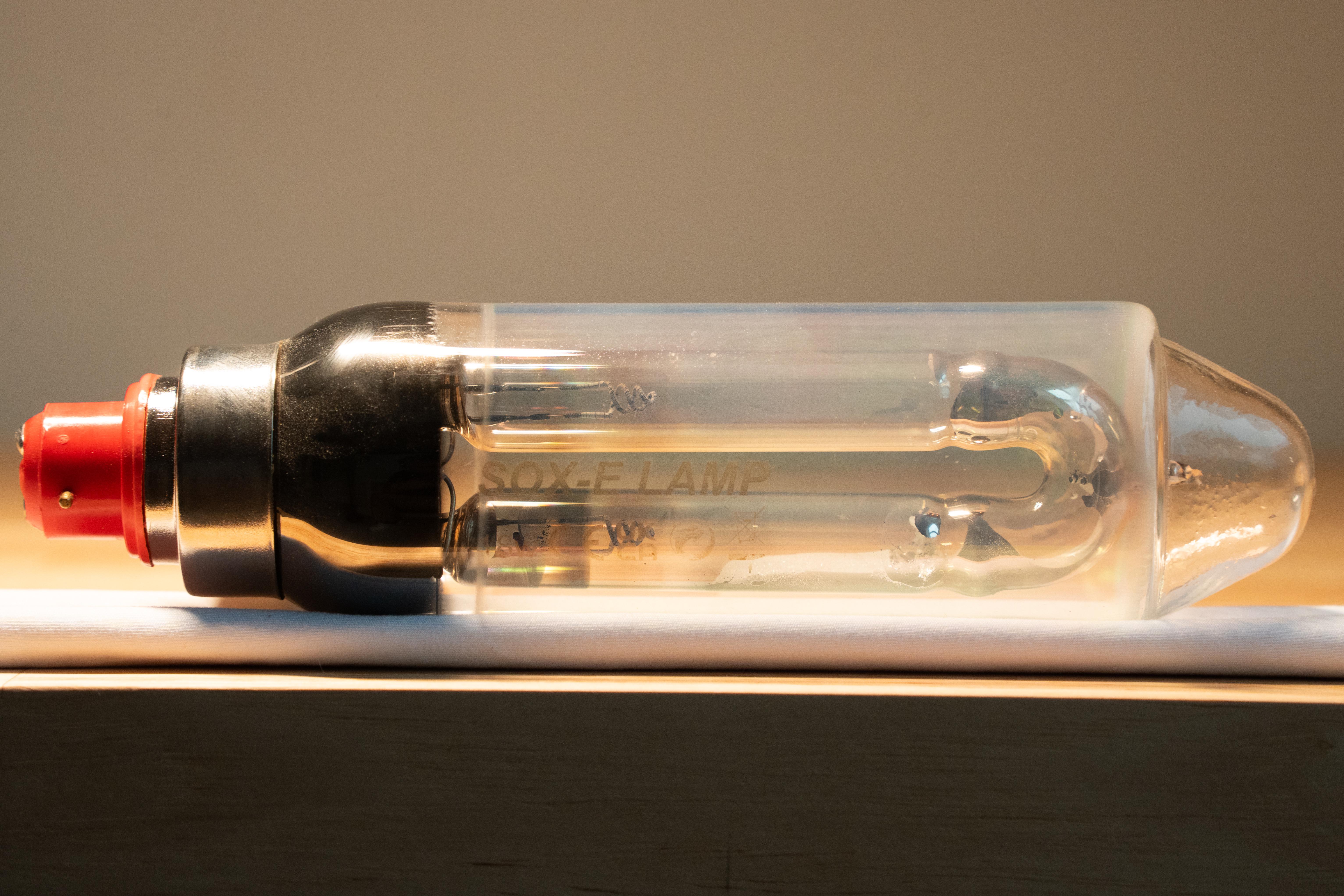
Once I had the fixtures, I needed the tubes themselves which are starting to get hard to find. Since street lighting is quickly moving to LEDs, the demand for these lamps has evaporated and as far as I can tell, the last manufacturer stopped producing them in 2019. I was able to find new-old stock on eBay, but as always with these dead technologies, I wonder how much longer it will be easy to get them. I bought an extra just in case.
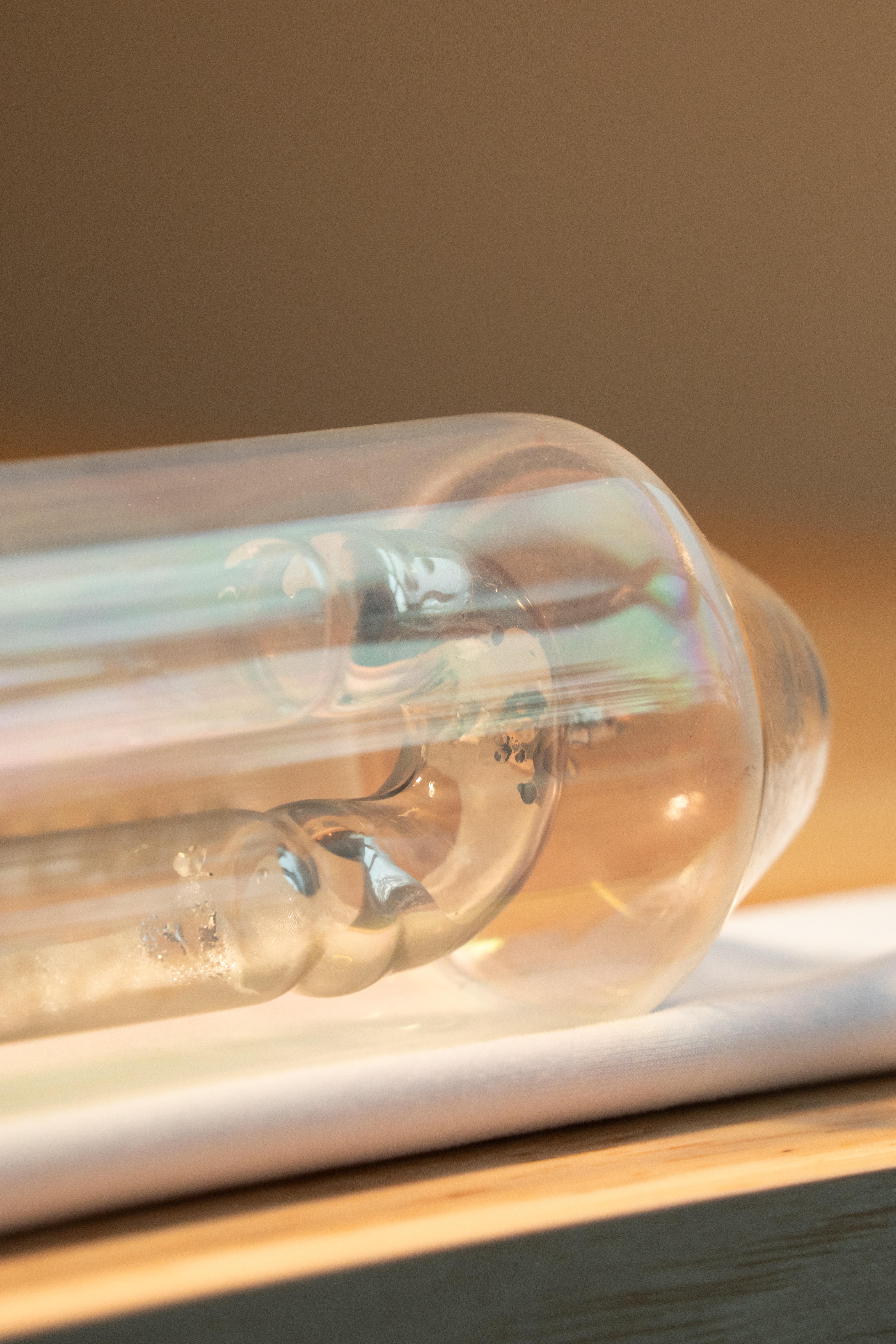
Before even powering them up, I was struck by how beautiful this technology is. The bare tubes look like wonderful pieces of laboratory equipment, and their inner surface is dotted with spots of shiny sodium metal, wonderfully tangible.
I installed the lamps in my fixtures and powered them on. When starting up, the lamps don’t immediately emit much yellow light, but instead flicker red-orange. This is because the tube needs to warm up for the sodium to vaporize and start emitting light, so the tubes also have a small amount of neon gas added which carries the current and produces a small amount of light when first powered on.
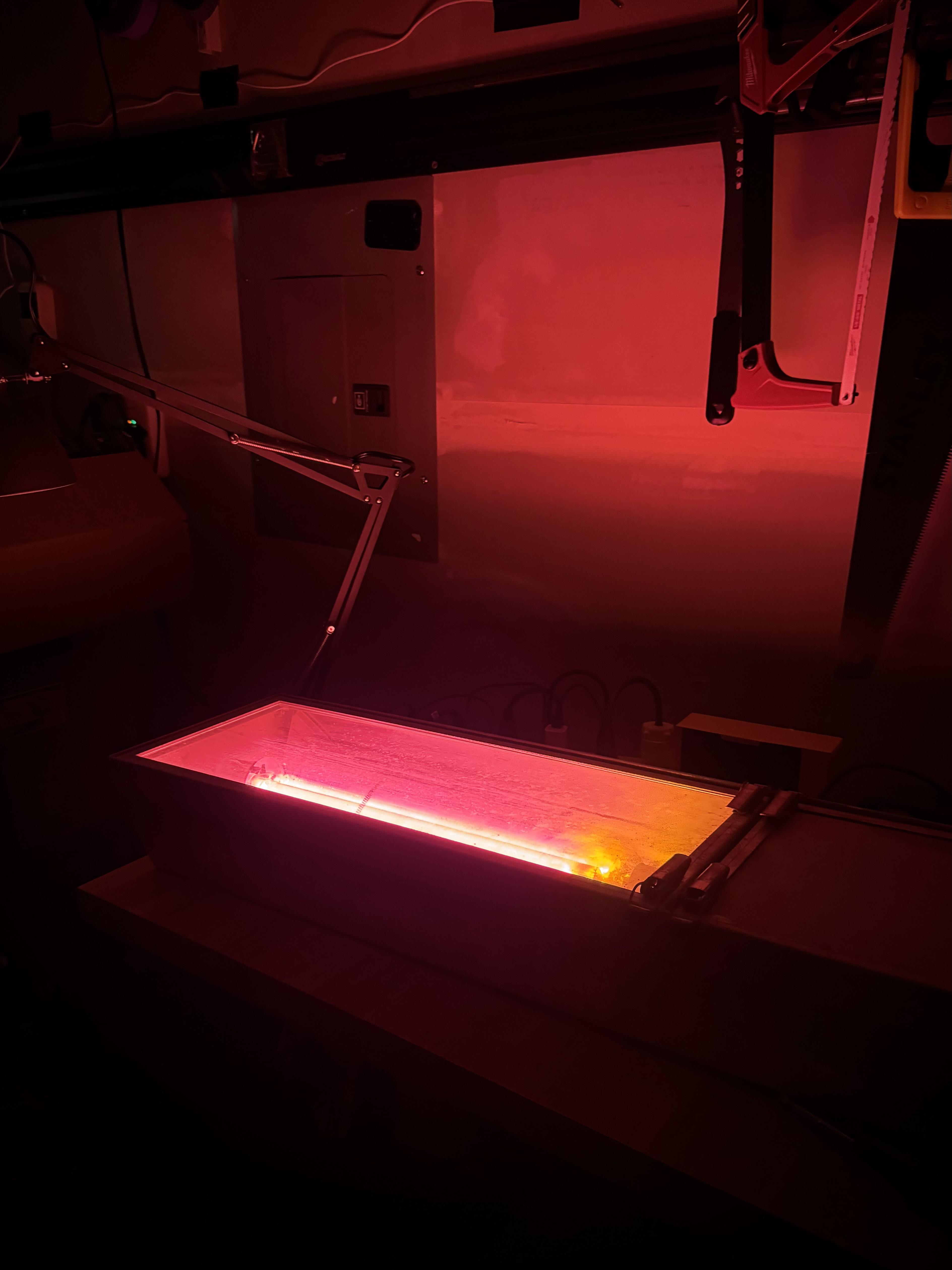
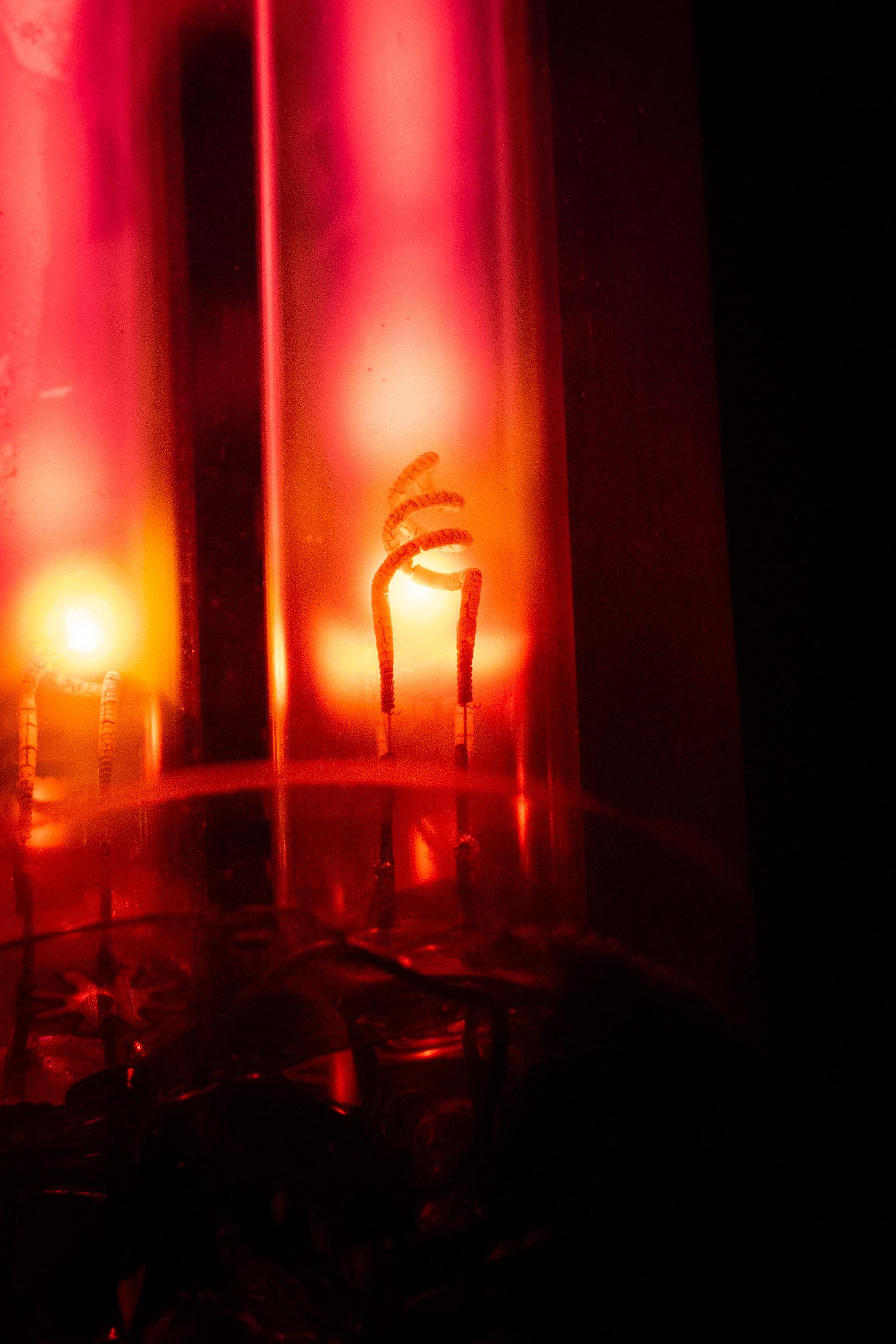
Gradually, over a few minutes, the lamps became brighter and yellower, until the sodium light washed out all the neon glow and I was surrounded by monochromatic 589nm yellow.
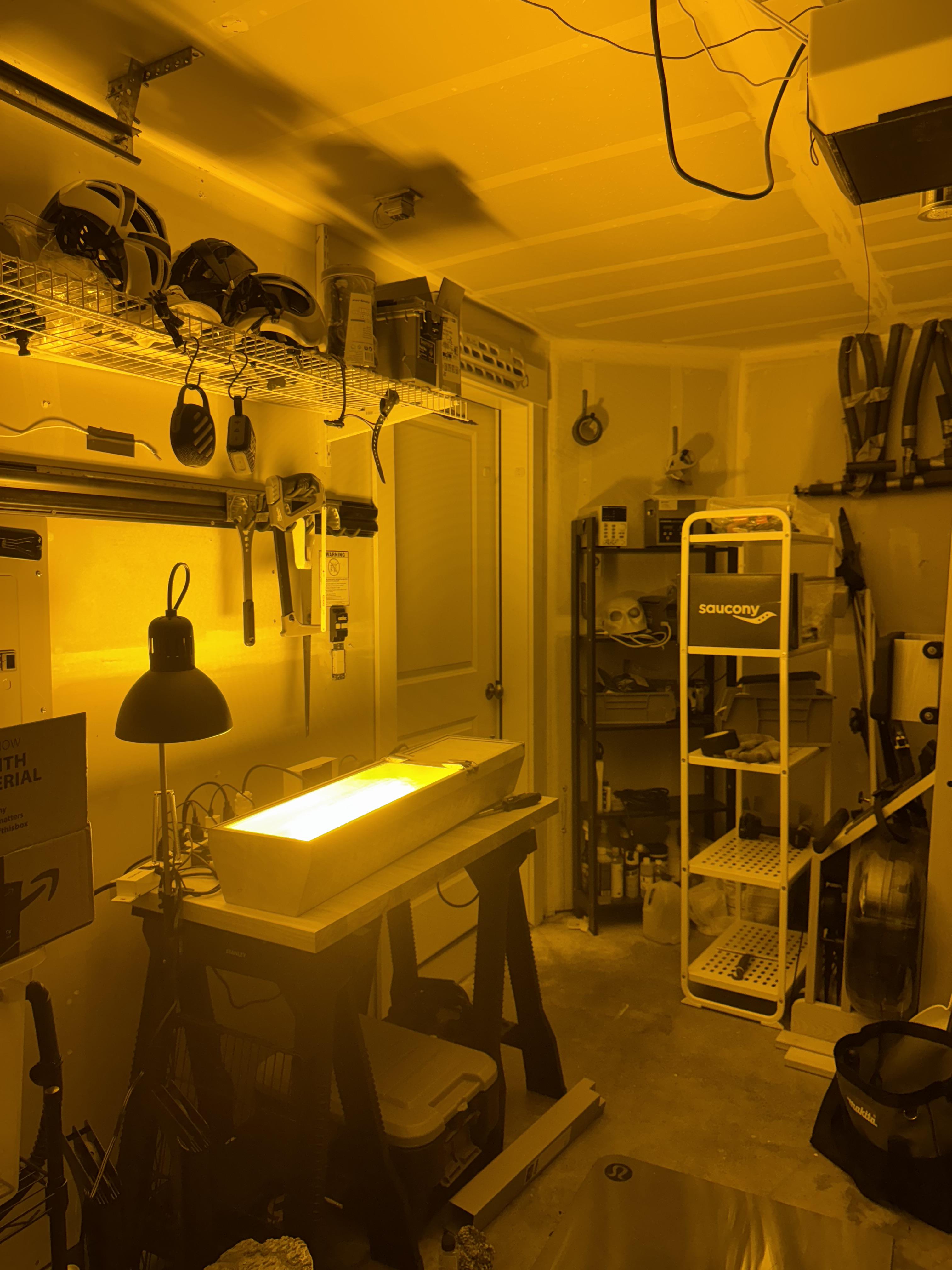
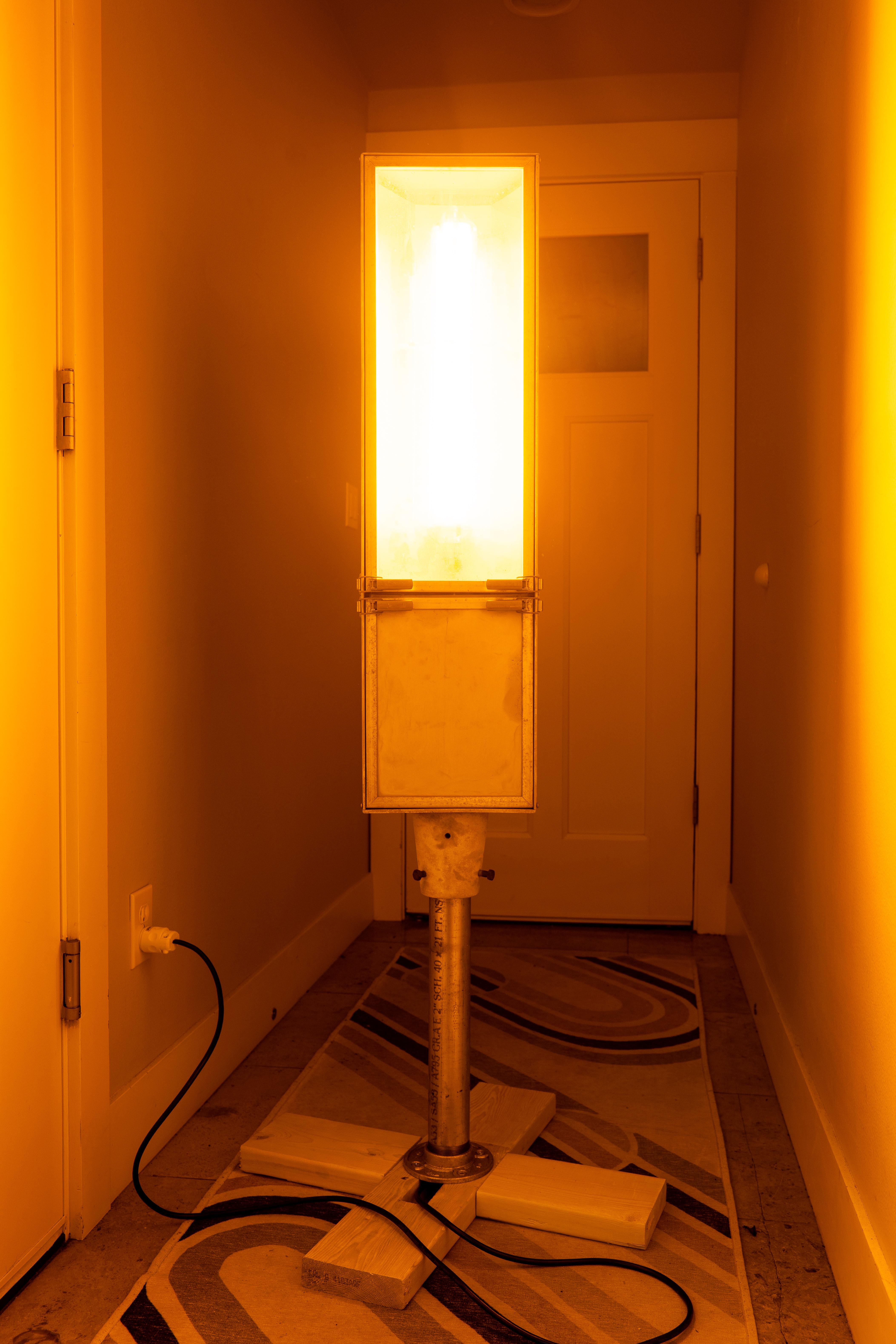
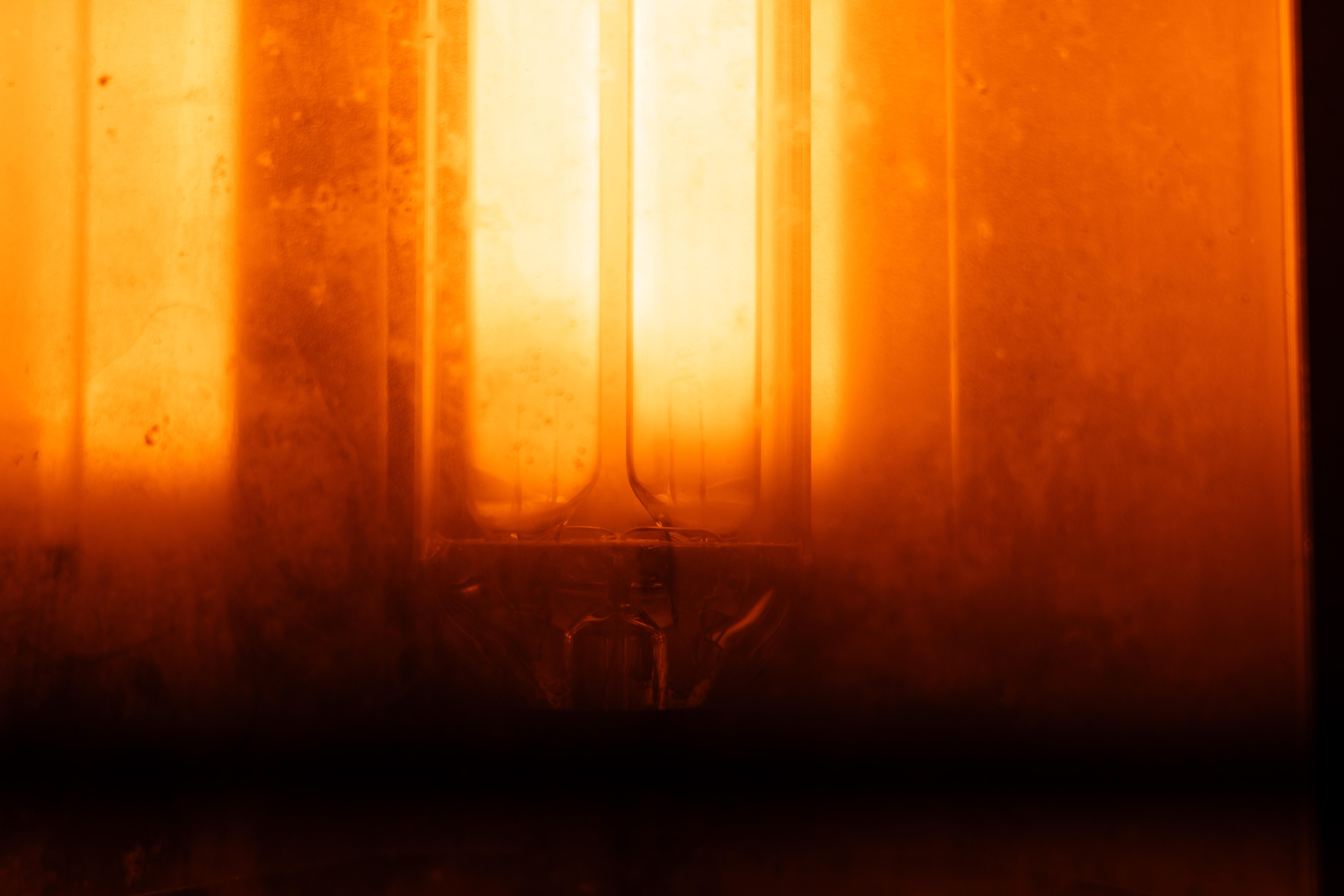
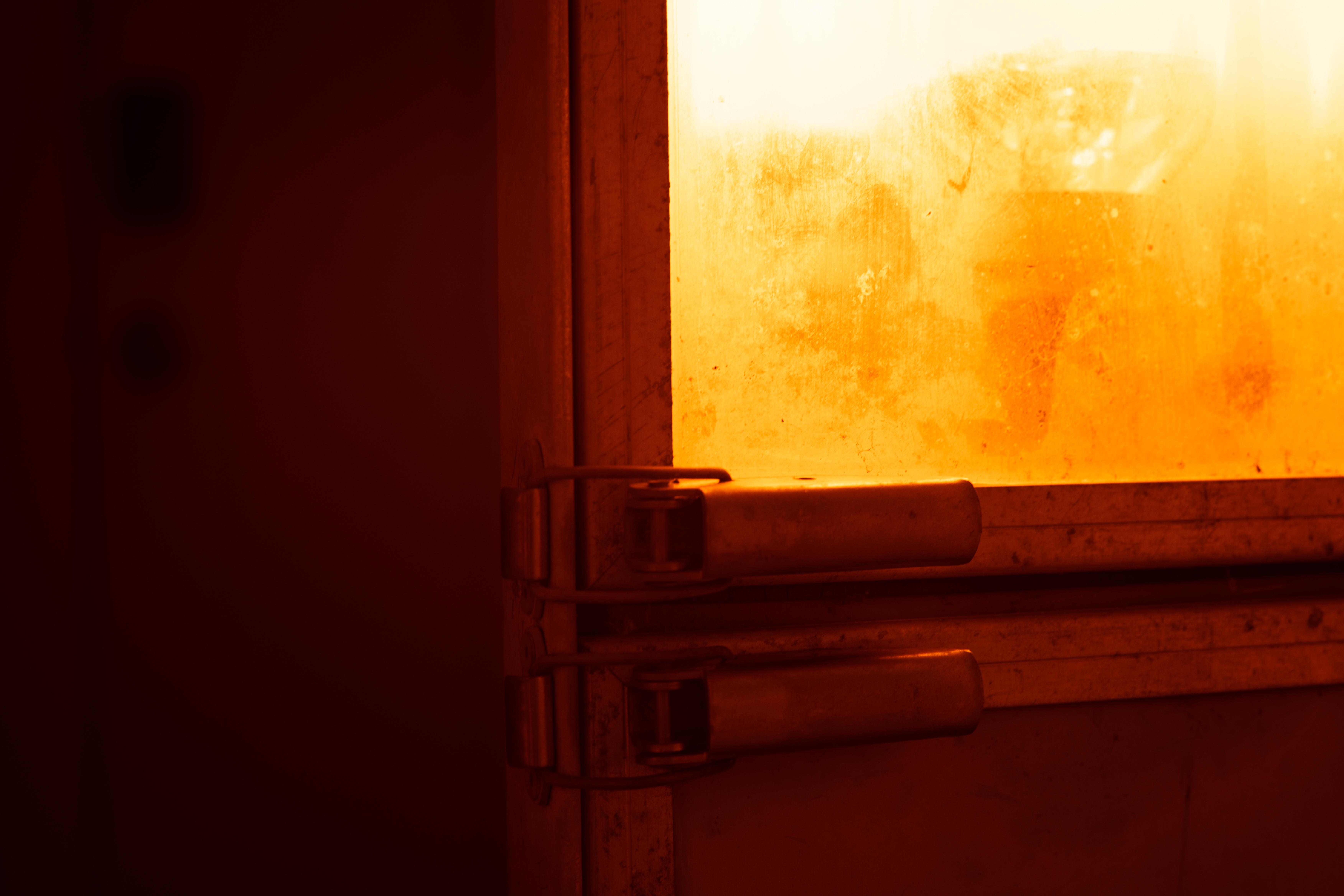
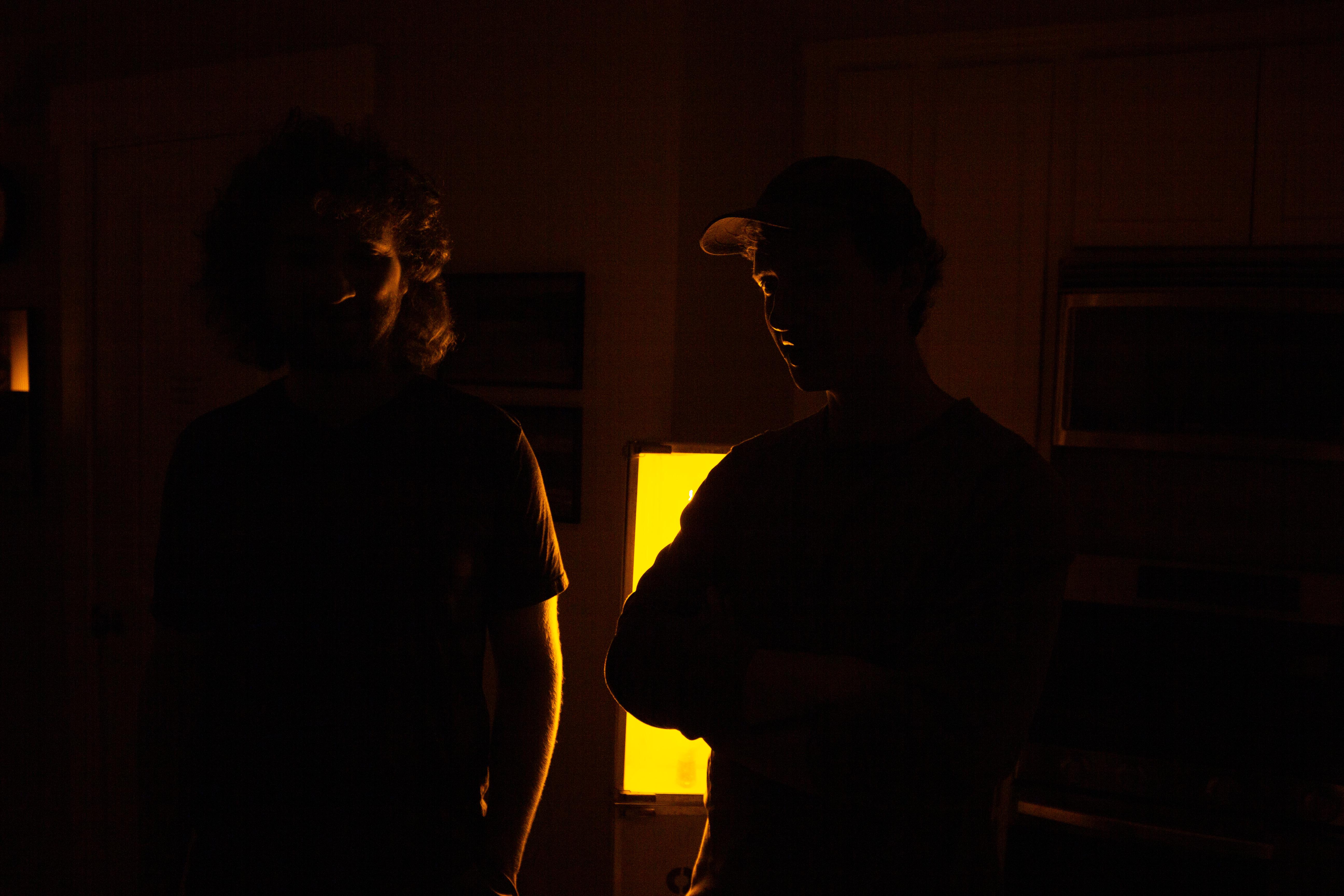
Powering up these lamps was my first time experiencing truly monochromatic lighting and I found it strange and unsettling. Photographs of these spaces always look extremely yellow, and I wouldn’t say the in-person experience isn’t yellow, but it’s also something else. The same way your eye adapts to the cool color temperature of daylight or the warmth of incandescent light, the yellowness of the experience quickly becomes normal, and the salient experience becomes, mostly, the astonishing lack of any perception of color.
Since the eye discerns between color by the ratio of activation of the different photosensitive cones, and that ratio will always be fixed when exposed to a single wavelength, the ability to see color is completely removed in this environment.
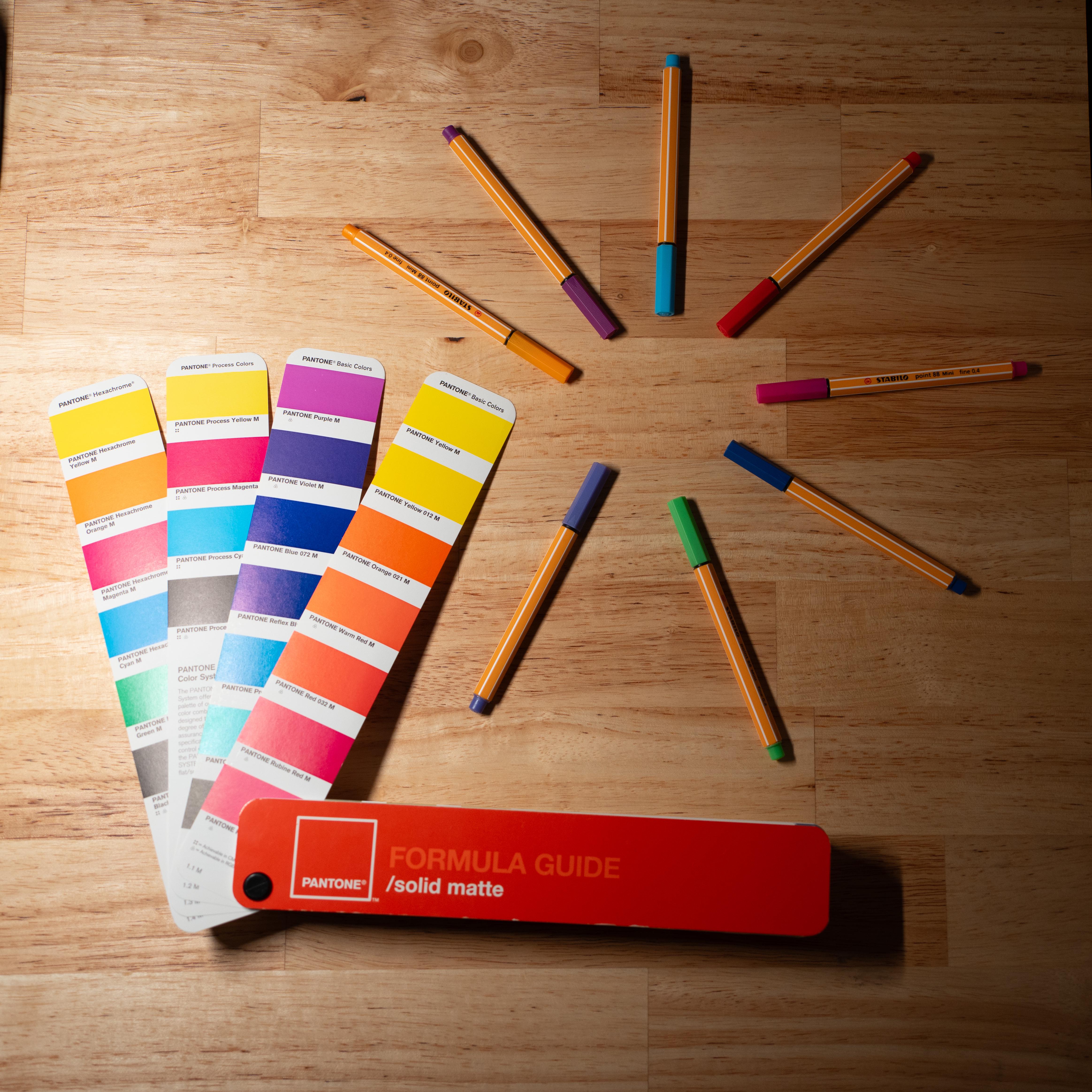
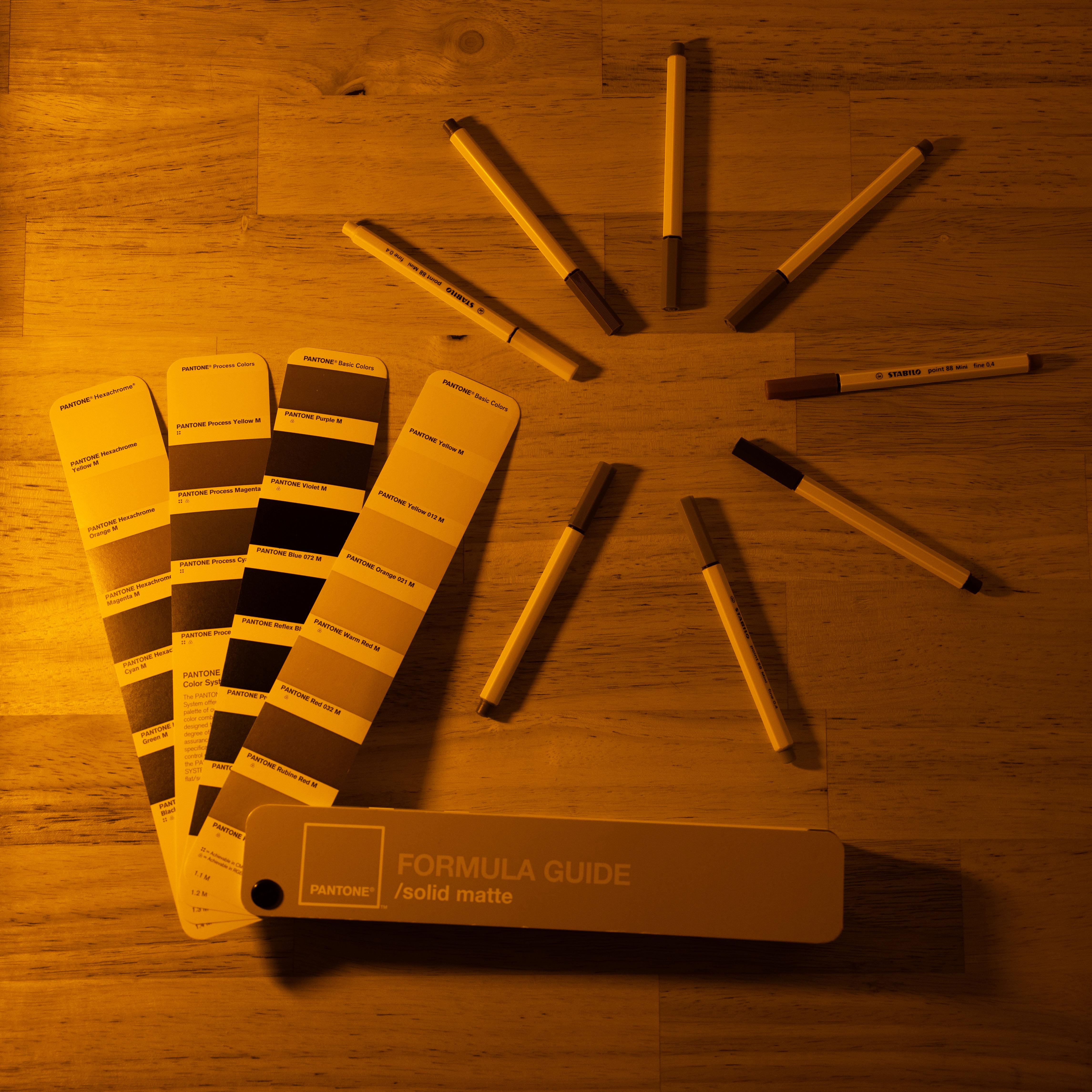
Once I was satisfied that my lamps worked, I fixed thick garbage bags over all my windows, taped over all the little electronic lights in my house, and removed the lightbulb from my fridge. I invited my friends over for a party and strictly banned any devices that produce polychromatic light. For the duration of the party, all color perception was banned.
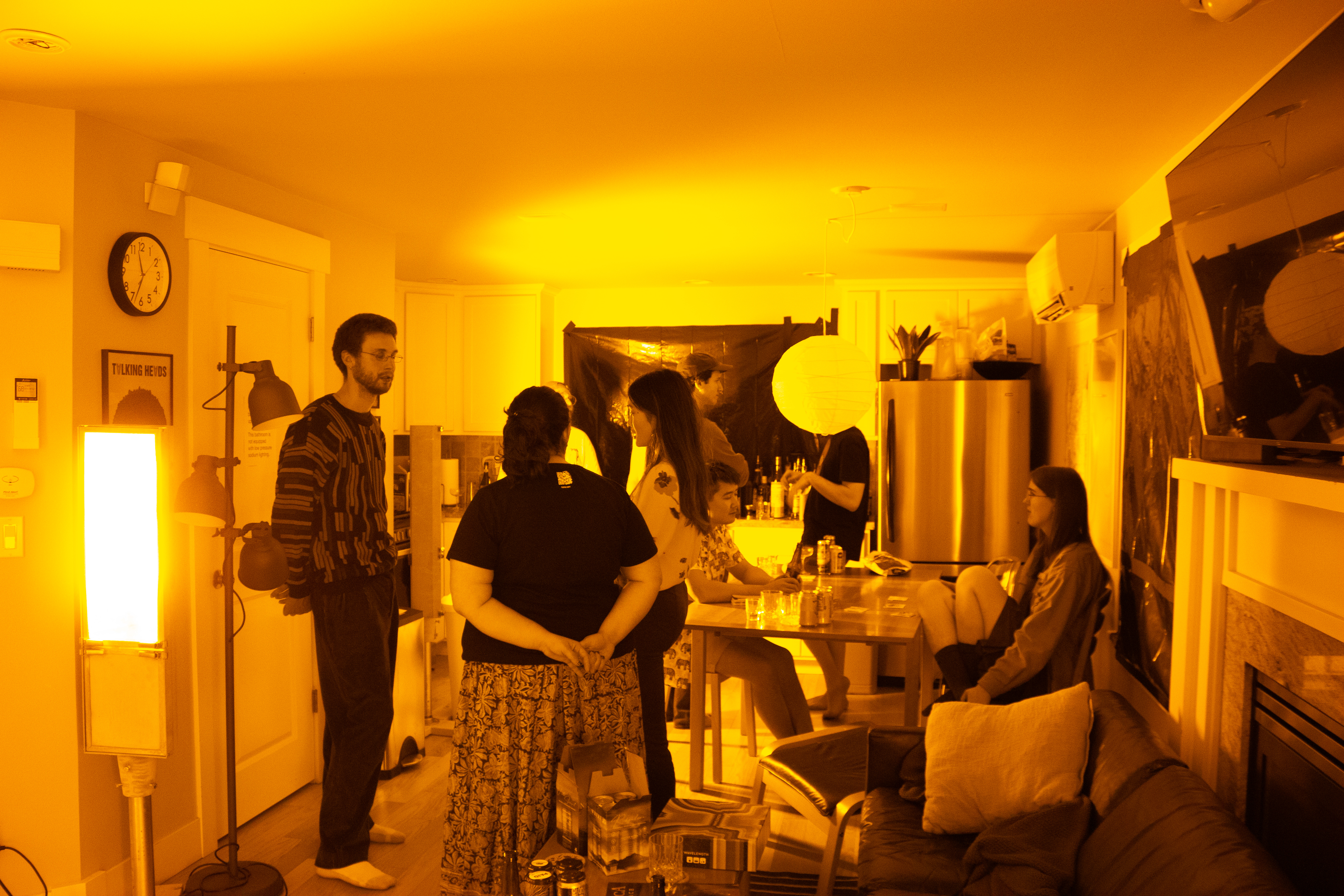
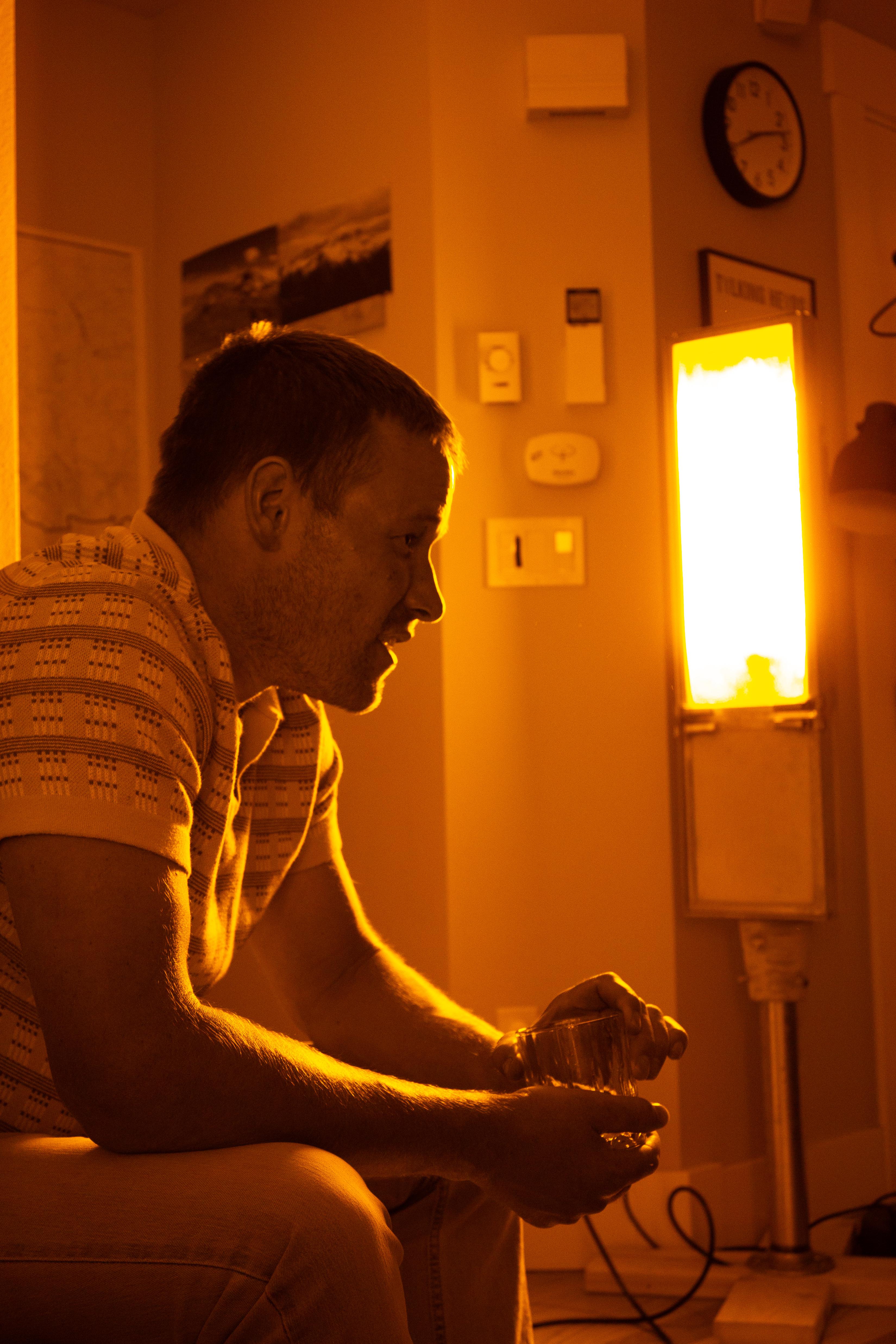
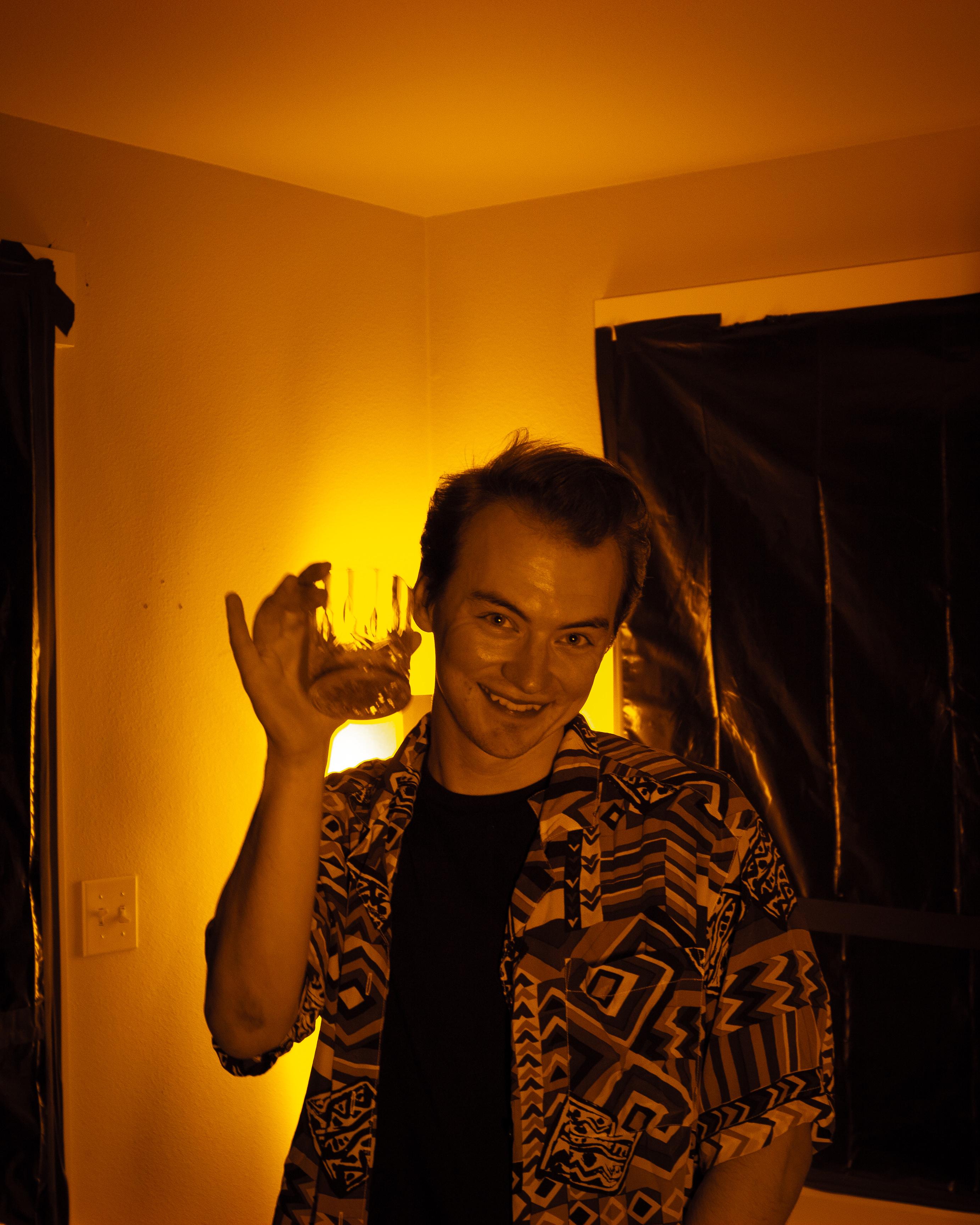
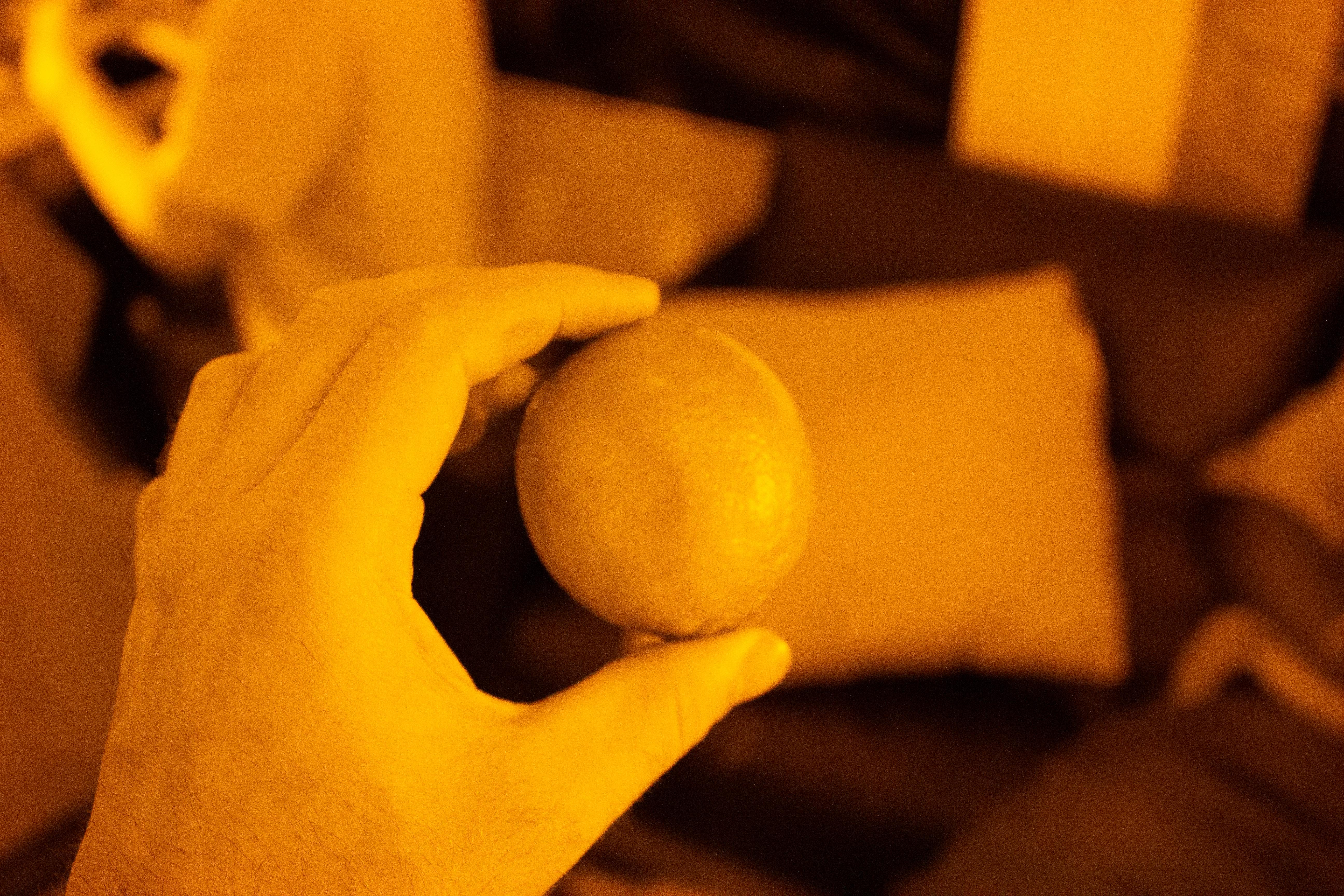
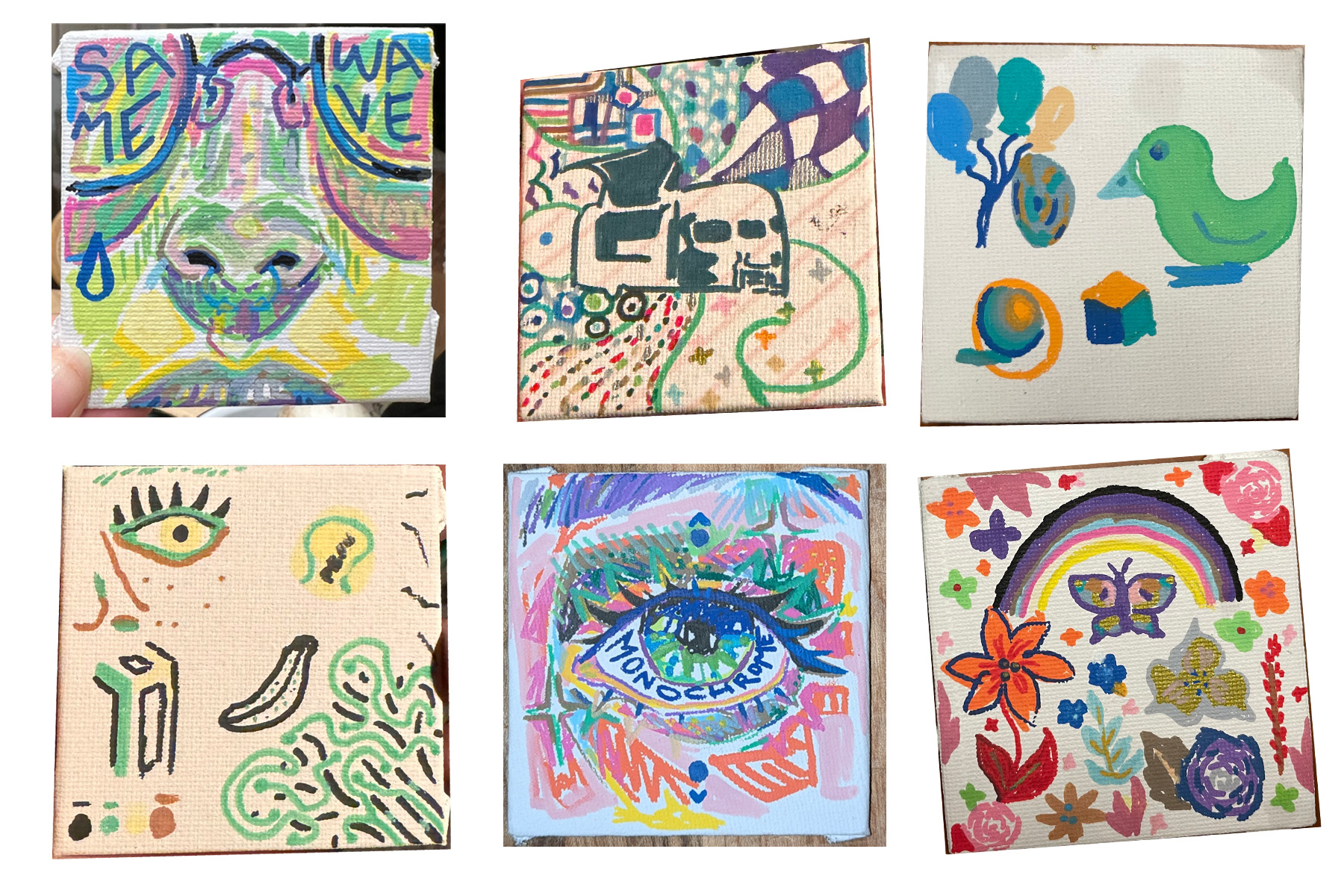
Some friends brought over little canvases and paint markers which only had numbers rather than color names printed on their barrels. Guests made art where they had no idea which colors they were using until after they left the party.
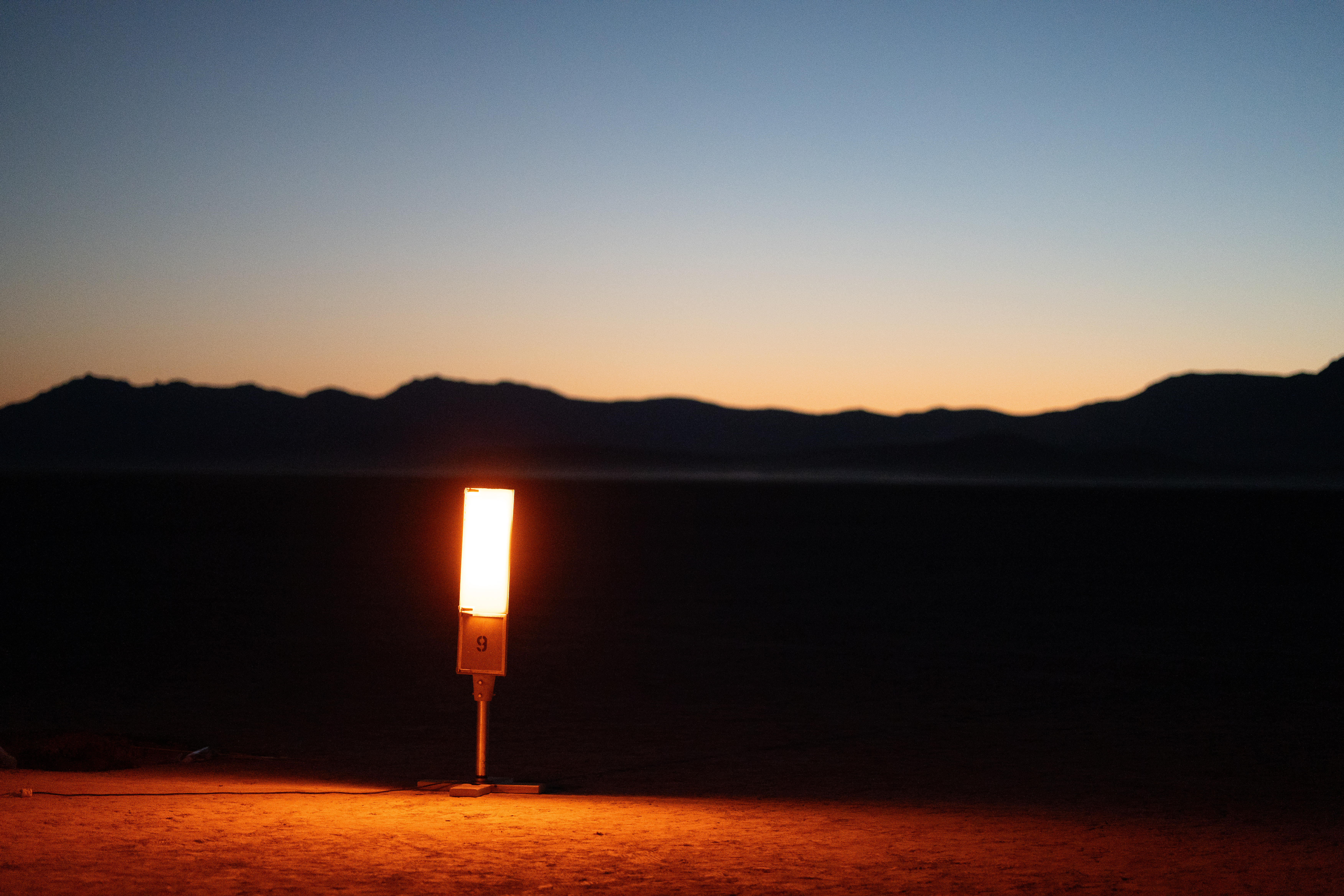
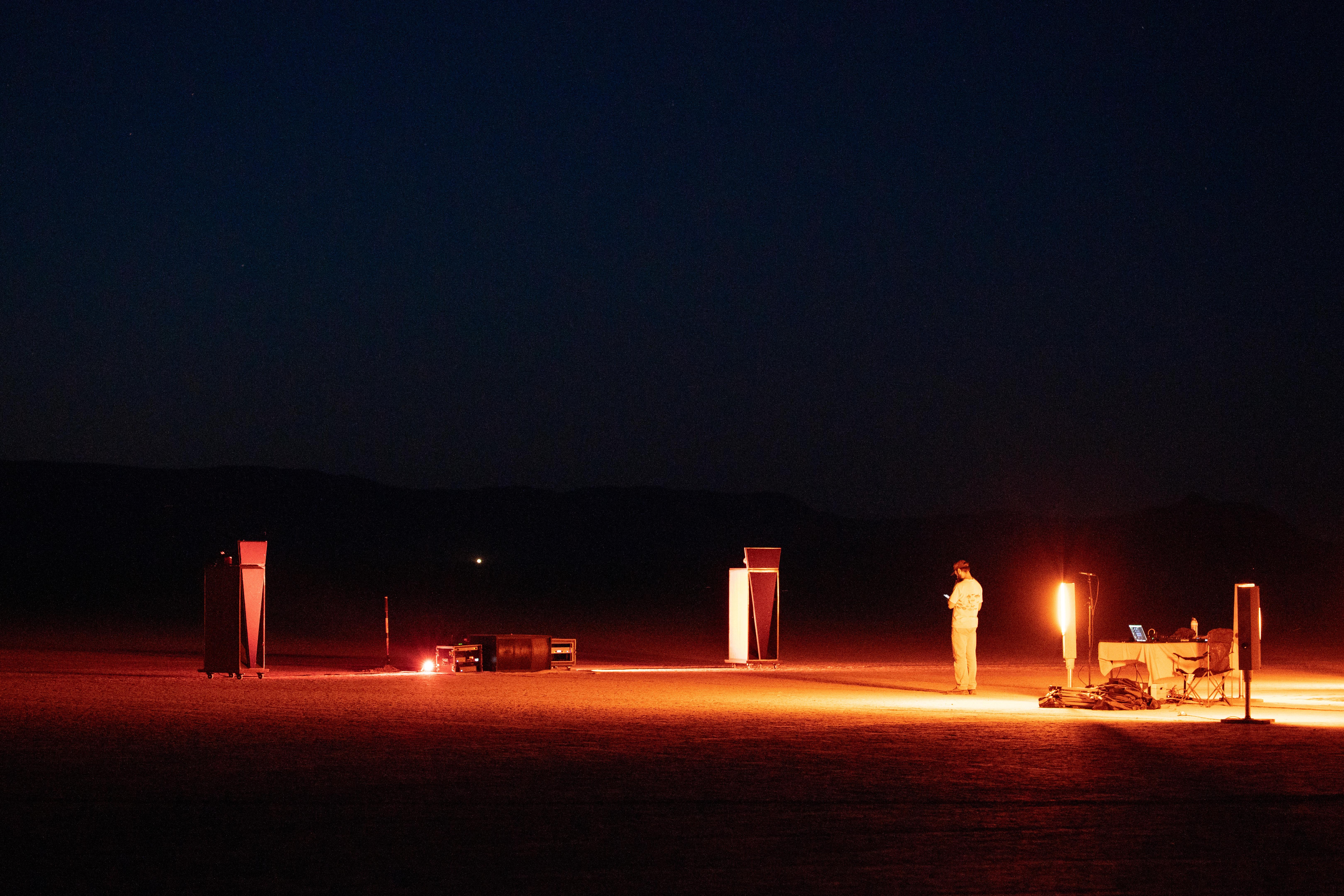
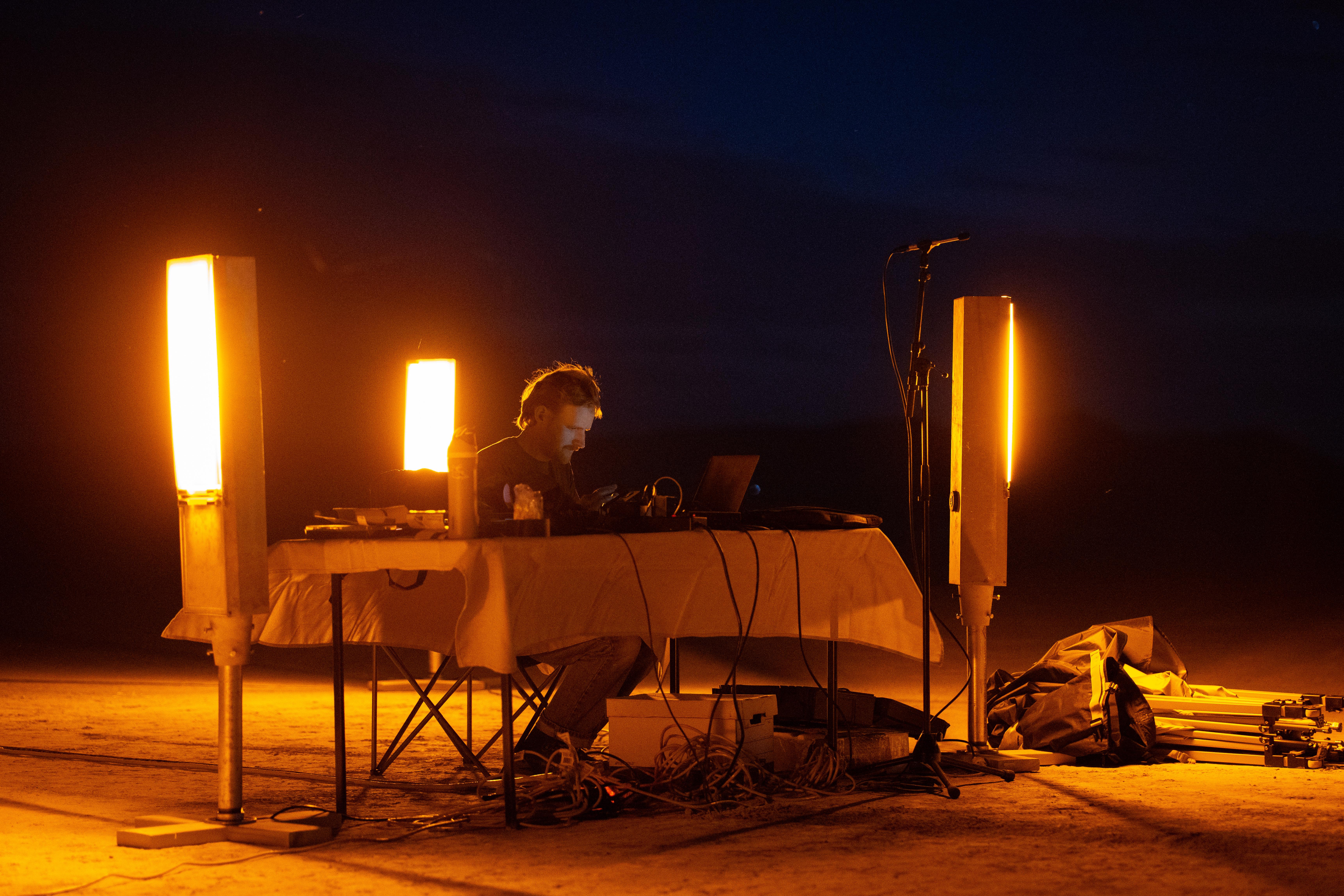
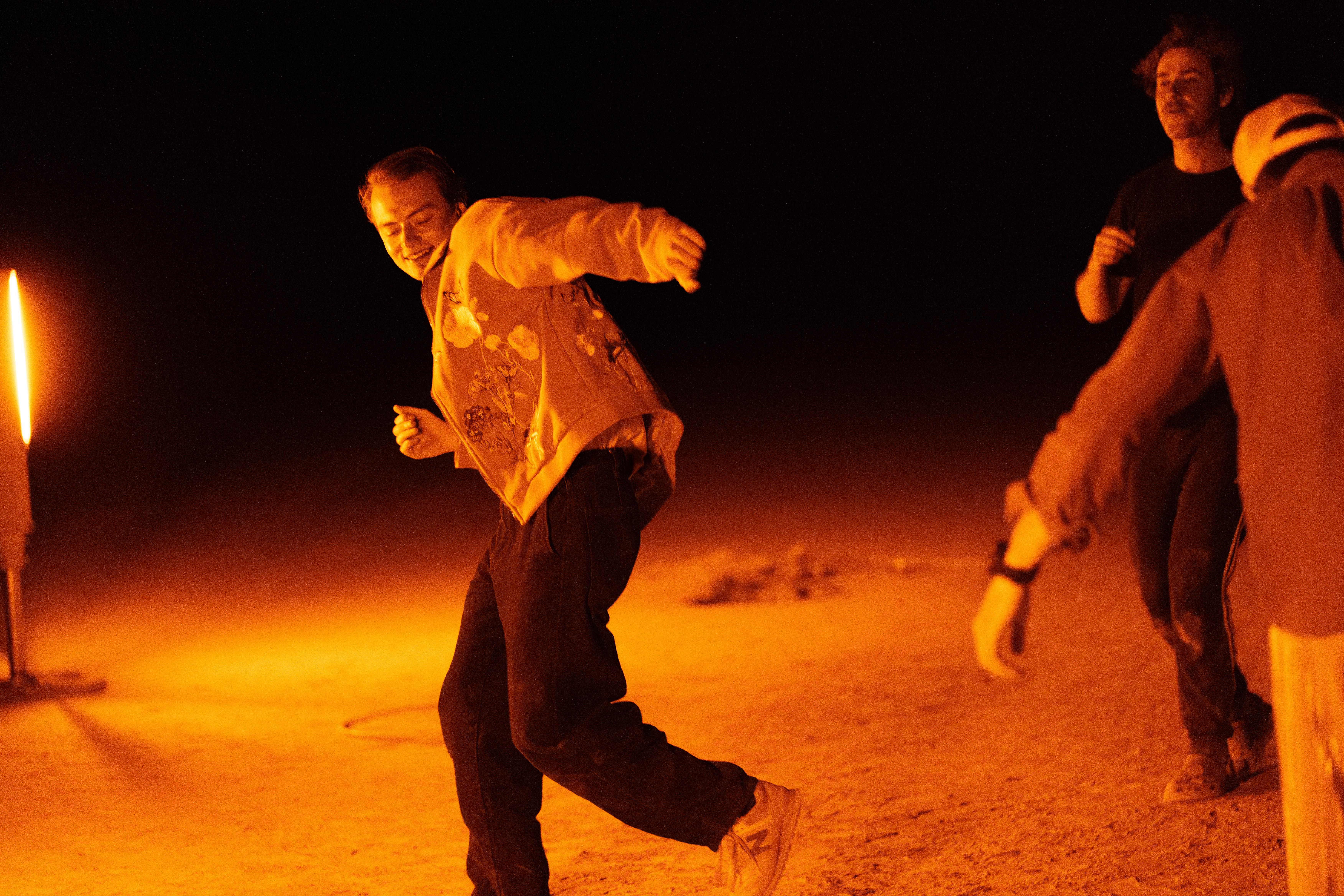
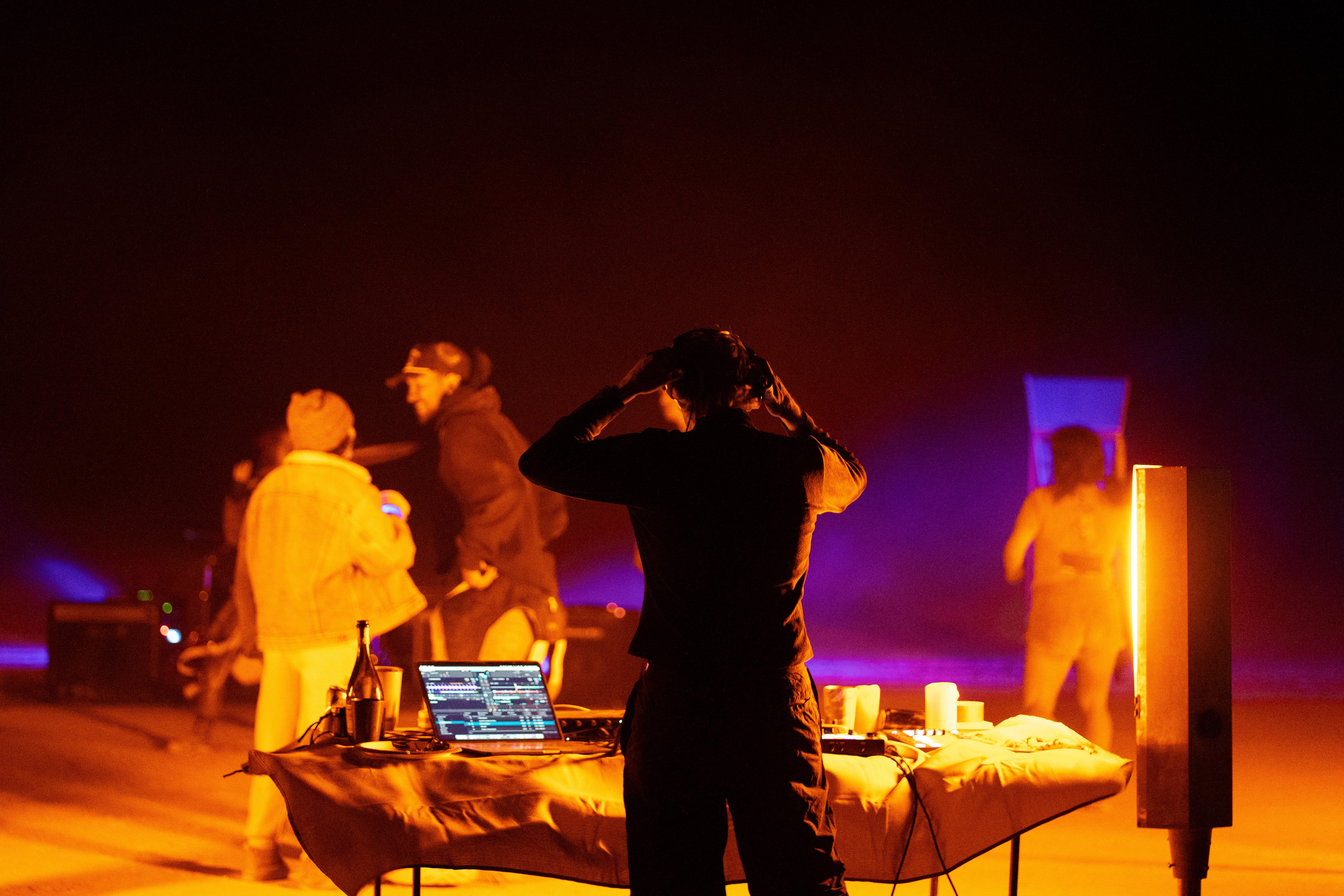
Later, I brought the lamps to a gathering in the Alvord Desert. Here, the goal wasn’t a high-minded monochromatic concept, we just needed lights, and old streetlights fit the bill very well. In fact, they were technically great for the role, since they’re incredibly energy efficient and barely increased load on our generator while lighting our whole dance floor.
Here, the lights produced a different feeling. To me, it felt like throwing a dance party in the noir haze of an almost-empty parking garage, or a rural gas station in a soon-to-be-forgotten decade.
I love taking a silly idea like this and just running with it to see where it goes. Both of these experiences were extremely novel, and that made them super engaging and fun. As a final note, I highly recommend finding any excuse possible to ban phones at a party, even if less absurd than my excuse of them emitting polychromatic light.